
Featured Non-Profit Interview: Sherry Clodman, CFRE
Interview by George Williams, Communications Specialist, Planned Legacy
About Sherry Clodman
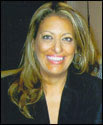 Sherry is the Principal of EH Pearce Consultants, a general fundraising consultancy that specializes in planned giving. An accomplished author, Sherry has held several National Development Directorships and is a seasoned leadership professional. Well respected for her broad-based expertise, achievement, high standards of practice and commitment to ethics, Sherry has worked with organizations large and small, urban and rural, local through national. Her books, including new arrival WELL ADVISED: A Planned Giving Reference Source for Allied Professionals, are available from Canadian FundRaiser. Please call (416) 345-9403 or email:[email protected] for more information.
Planned Legacy: Congratulations on your third book! I understand it is going to press as we speak. Can you tell us why you wrote WELL ADVISED: A Planned Giving Reference Source for Allied Professionals.
Sherry Clodman: Having previously written two books that deal with the management and marketing of planned giving programs, Dr. Edward H. Pearce (my late friend, colleague and co-author) and myself identified a burgeoning need to better educate and encourage a broader involvement of the allied professionals.
These advisors may include estate lawyers, tax accountants, estate planners, trust officers, financial planners, etc. Whether directly involved with charities in an advisory capacity, or indirectly involved by promoting the philanthropic dialogue with their clients, we understood that a solid reference source was needed to fill the existing gap.
Planned Legacy: So, the book is designed primarily to assist allied professionals in facilitating planned gifts that benefit charities. What is the key role of professional advisors in the community?
Sherry Clodman: Professional advisors are an important part of a team of individuals intimately involved in the gift-giving process. The team usually includes the professional, the client (donor), the charity and/or the charity’s various representatives. In most cases, these will be the fundraiser or the gift planner, but may also include the CEO, Chair of the Board of Directors or Head of Program that the client wishes to fund.
If the charitable gift is particularly complex, the team may include other professional advisors and/or interested parties such as family members. Acting together, the team is, in reality, promoting the general health of the charity through philanthropy. In particular, however, the role of the team is to fulfill the philanthropic wishes of the donor while meeting the charities needs through the most appropriate, emotional, cost and tax effective means.
The charity’s role is obvious. While most charities will attempt to balance the needs of its donors with its own needs, its role is to promote its charitable activities and to raise funds to continue those activities. As such it is NOT a neutral party, therefore requiring the professional advisor to be "an independent and competent voice" speaking on behalf of the donor, in order to protect the gift from challenge and future revocation. It is therefore the role of the professional advisor to scrutinize all gift proposals. They have knowledge of the client’s financial and other personal circumstances, and are in the best position to determine if the proposed gift is appropriate on all levels.
Not just limited to proposal review, their role can and should be much more proactive in the whole process by using their expertise to help maximize the charitable gift. Their knowledge of the tax structure of estate planning or the advantages of the various means of giving can be actively brought forward. They can contribute ideas and present concepts to the client. And they are in the best position to recommend particular assets to fund the gift. They may also prepare alternate proposals or recommend another giving strategy which may, in fact, be more appropriate than the proposals asked to review. WELL ADVISED goes on to present giving concepts such as key benefits to the professional advisor, integration of concepts into a holistic approach in serving clients needs, the ethics of charitable gifts and much more.
Planned Legacy: I can’t wait to receive my copy. Let’s move on now to target marketing for planned giving by constituency, demography and gender. That’s a mouthful! How do charities make sense out of the planned giving marketplace?
Sherry Clodman: Yes it is a mouthful! However, it is a topic that can be both simple and complex at the same time. First, we need to make sense out of the marketplace, and we do that through the identification of target markets. If we begin by briefly looking at the concept of a ‘market’, we see that a market is usually defined as “people or organizations with wants or needs to satisfy, resources to spend, and a willingness to spend those resources.” A target market, for our purposes, is “a group of donors at whom your organization can specifically aim its marketing efforts.”
Obviously, your organization isn’t going to attempt to target EVERY distinct market that exists. Rather, you’ll be channeling your energies to appeal to the groups that you have reason to believe will have an interest in your charity, and in particular, its planned giving opportunities. The key question then becomes: “What groups will have such an interest?” Groups that are generally perceived to be a charities ‘best bets’ to make a planned gift. In a nutshell, target marketing is prospect identification on a macro level. It helps identify initial constituencies in your donor universe --- the groups who are most likely to give.
Planned Legacy: Can you start by explaining the concept of constituency?
Sherry Clodman: One of the most valuable concepts fundraisers use is that of ‘constituency’. Constituency is thought of as the ‘natural’ market for your charity. Natural in the sense that an affiliation might reasonably be expected between certain organizations and individuals or groups. To illustrate what I mean, let me give you a few examples.
In the ‘Educational Sector’ natural constituencies would include alumni of colleges, universities and private schools. In the ‘Religious Sector’ natural constituents would include members or congregants. And, in the ‘Health Care Sector’, if we look at Hospitals, then patients and their families are the key constituencies. No matter what your particular donor universe looks like, it is important to properly identify them, organize them, and segment them in order to establish your particular ‘target markets’.
Planned Legacy: What about demographics?
Sherry Clodman: Demographics can be defined as ‘sets of characteristics about people’. Age, sex, marital status, education, occupation and income are the ‘barometers of measurement’ most frequently used. Additionally, ‘household characteristics’ such as number and age of children, and life stage, are also considered important. There are numerous potential donors in the planned giving universe…and ‘demographics’ is the method most commonly used to ‘group people’ in an effort to better understand them, their motivations, and to determine which groups are the best candidates for your prospect pool.
The most significant thing we learn from demographics is that ‘the future is not going to be like the past!' We can not rest comfortably based on what we have learned over the past 25 years, or even over the last five years for that matter. The only thing we can depend on is that ‘change is a constant’. With that in mind, astute planned giving professionals must ‘embrace’ the concept of ‘evolution’, and they must be committed to keeping abreast of, and anticipating demographic change.
Planned Legacy: Are there any demographic trends we should be aware of?
Sherry Clodman: Generally there are five key trends that will continue to have an increasing impact on the practice of our profession. Keeping in mind that most planned giving is done later in life, we can categorize the trends as: overall aging of the public coupled with increasing longevity; the huge group of ‘boomers’ in middle-age; new lifestyles, income, wealth and wealth control patterns that have emerged as a result of working women; an increasing diversification of the population and, differing views and perspectives held by the young. Being aware of and anticipating trends such as these can help us to better predict, and consequently plan for the future.
Planned Legacy: What then are the key aspects of demographics for planned giving?
Sherry Clodman: Great question. They key aspects include: targeting mature individuals by age distribution, by values, by life stages, and by gender. Age is perhaps the most significant factor in planned giving. The population is aging, living longer and average life expectancies have increased due to improvement in health care and perhaps in lifestyle.
This has very significant implications for gift planners, as most gift commitments are received from donors later in life. As people age, their ‘needs’ and ‘wants’ change, and the available ‘resources’ to satisfy their needs and their wants will also shift. If people continue to retire at the traditional retirement age, or earlier, then they have to think of a 20-25 year retirement as opposed to the 10-15 year retirement that was previously common.
This brings SEVERAL important questions to the forefront that we as planned giving professionals need to be asking now, and preparing for in the future. Will they want to part with assets that they may need to fund their retirement? Will there be the large inter-generational transfer of wealth that we are counting on for planned giving, or will they have, in fact, spent their children’s inheritance? What happens if bequests are received five, eight or 10 years later than would have been thought? And, are charitable gift annuities then becoming a ‘risky’ proposition?
Planned Legacy: This is interesting information! What can you tell us about targeting mature individuals?
Sherry Clodman: From a planned giving perspective, there are two common approaches: by age distribution and by values. Briefly, when we talk about age distribution, generally we break ages into 3 categories: 50-64, 60-74 and 75 plus.
At age 50-64, most people are ‘pre-retirement’ or they are ‘in transition’. Often, the children are grown and the mortgage is paid. They have the highest disposable income of any age group, but they have not had sufficient time to build their asset base. While often not ready to make a planned giving commitment, now is the time to start establishing a relationship with them for the future..
At age 60-74, most people are ‘newly retired or retired’. As people pass through this age group, and become more secure in their retirement lifestyle, they become more pre-disposed to planned giving commitments, if the risk is removed, or minimized.
At age 74 or older, many in this group have already made planned giving commitments, and now feel in a better position to follow through. They have a better understanding of the financial stability of their adult children, and their own financial situation. If they haven’t done so already, this is the stage where they consider how they will be remembered. Many find that this is the time ‘to give back’ for the good life they have had to date.
Moving on to values, when establishing a target market, or segmenting your constituency, consideration should also be given to the values that individuals within that segment may share. It has been established that older donors share a number of values that have significant implications for gift planning. Understanding these values will assist you in preparing your marketing materials, as well as the overall approach you take to these prospects. Briefly, mature individuals can be segmented in three ways, depending on their values.
The first group is often referred to as ‘The Rational’. Comprised of roughly half the population over age 50, they share a ‘rational approach’ to life and do not let emotions affect their judgment. They have an aversion to complexity and find it difficult to relate to people who differ from themselves. They are risk adverse and may not be comfortable with technology. And they have little ‘buy in’ to trends such as political correctness, ethical investing, and politicized ecological concerns.
The second group is referred to as ‘The Emotive’. This group represents about one quarter of the population over 50 and they approach life from a much more emotional and less rational perspective. They are often more involved in community activities, more
likely to share traditional religious beliefs, and are practical, rather than conspicuous consumers. They also embrace the concept of ‘responsibility for others’, their family members, church and community.
The third group is often referred to as ‘The Educated’. These people also represent one quarter of the population over 50. They are inclined to be more educated and are likely to be professionals. They are modern in their thinking, and embrace environmental, ethical and other trendy issues. Often quite adverse to risk, they are well informed consumers, but have strong opinions on perceived financial mismanagement by government. The ‘Educated’ also consider religion as an important part of their lives.
Planned Legacy: Where does life stage come in? And why is it of particular importance to gift planners?
Sherry Clodman: We can’t talk about demography without addressing the concept of life stage. Closely associated with age, the concept of life stage provides important insight to the marketing of planned gifts. This concept is of particular importance to gift planners because planned giving is very much a ‘when’ type commitment.
There are certain times in one’s life cycle when a significant event or rite of passage occurs. These may include events such as a marriage, birth of a child or grandchild, death of a loved one, or receiving an inheritance. Some affluent individuals may feel compelled to write a will and/or make a planned gift when contemplating extended travel plans, such as taking an ‘Around the World’ tour. Understanding the significance and timing implication inherent in this concept of life stage can be useful in targeting those who may be in a ‘yes’ life stage! Any of the following key life stages may occur at various ages:
Single/youth stage - These are young single people, recently out of school, and into their early working careers. Generally, with few exceptions, they are not planned giving candidates, and there is no real opportunity at this time.
Single/advanced stage - These are older single people. Some are single because they haven’t found the ‘right’ partner. Others are single by choice. In either case, as they progress through their late 30’s and 40’s, and perhaps beyond…they are now in a position to begin earning fairly high incomes. Without family responsibilities (except perhaps a mortgage), they are likely to have high disposable incomes. The younger people in this group could be a planned giving market if an approach were properly structured.
While planned giving is generally made from assets, and these individuals usually do not have significant assets, they can in effect create assets by the purchase of a life insurance policy. And because of their comparative youth, life insurance is relatively inexpensive. By paying for it over a period of say 5-7 years, they are effectively making a planned gift of significance out of their current income! The opportunity here is that middle-aged singles with high income are excellent prospects for gifts of life insurance. Older singles with assets and few potential beneficiaries are also great prospects for all forms of planned giving, especially gifts by Will.
Two Person Household/No Children Stage - Individuals in this stage can range from young through middle age to mature. If the household has just been established, and children are expected in the next few years, they will not be good candidates for planned gifts. However, often the birth of a child creates the need for a Will. And, in the writing of a Will an opportunity exists for the establishment of a planned gift. If however, there are no plans for children, or if the children have grown up and moved out – these groups with their high incomes and asset acquisition are good targets for planned gifts. If they are younger, now is the time to start to cultivate them. If over 50, a planned gift commitment is a reasonable target. Look for opportunities around significant life events such as a marriage, the purchase of a home, or a re-location to another country, etc. The opportunity here is that this group is ripe for endowments funded either through cash, bequest in the Will, life insurance or through securities and strip bonds.
Households with children - Generally speaking, this group is not a target for planned giving, except in the instance where the children are grown and working, but still living at home. As the birth of a child will create the need for a Will, the writing of a Will may also create the opportunity for a planned gift. Gift planners have to learn to be patient and wait for the children to grow up, and for the household to move on to the empty nest stage. However, it may be appropriate to start cultivating this group. The opportunity here too, is to look for that life event, such as the birth of a child that creates the opportunity for a gift by Will.
Retirement. Generally, during retirement years, income is reduced and there is a need for ensuring an ongoing income stream. This provides a marketing opportunity for gift annuities and/or charitable remainder trusts.
Planned Legacy: Why is it critical to understand the occurrences that impact on life stages?
Sherry Clodman: Astute gift planners will watch significant events that are likely to trigger the donor’s readiness to think, re-evaluate or express their values by making a planned gift. These ‘triggers’ may include:
Birth of a child - As I said earlier, often a new addition to the family creates the need for a Will, and in the writing of a new Will, an opportunity is presented for making a planned gift.
Promotion or partnership - Part and parcel to an elevated business position or new financial success, is the likelihood of increased disposable income. These people require investment and tax planning advice, and may respond favourably to a planned gift marketing approach using seminars or workshops.
Death of a parent - The death of a parent often brings to light one’s own mortality. And it brings to the forefront issues such as re-evaluating their Will or their life priorities.
Additional disposable income may also become available following the death of a parent if eldercare was being provided.
Death of a spouse/child/loved one or friend - In much the same way as the death of a parent, issues of one’s own mortality, success and personal values are brought to the forefront. Often, these individuals wish to memorialize their loved one. An endowed fund or other naming opportunities are good marketing approaches in these scenarios.
Receiving an inheritance or a windfall - One of the key findings of a wealth management poll found that of the top 25% of the population by income, 77% of those who received an inheritance indicated that they would consider making a gift to charity. Given this group’s interest as well as their ability to do so, it is wise to market planned gift opportunities to this particular segment. Alternatively, increased ability that comes with financial windfalls translates into increased means to make planned gifts.
Divorce or separation - While a divorce always requires a new Will, the transition from both a divorce or separation is also a time for the re-examination of one’s personal life, finances, values and future directions. These transitions may provide a timely opportunity to express new directions through a planned gift.
Re-marriage - This life stage will trigger the necessity to write a new Will. There are a multitude of issues that result from re-marriage. Ranging from the re-direction of family assets to the provision for beneficiaries, a great deal of planning takes place at this juncture resulting in gift planning opportunities. This life event often occurs between ages 45-55. With the mortgage paid off, these individuals have a greater cash flow and may be candidates for cash gifts and for planned gifts such as life insurance.
As you can see, the various life stages can be finely segmented by several factors. The gift planner must decide how much segmentation is relevant to their particular constituency. Since it is likely that funds will be insufficient to market to all segments potentially responsive to life stages, it is prudent to target only those groups with the highest potential (in descending priority) to assure that your charity best utilizes the marketing budget.
Planned Legacy: You mentioned that gender is a factor increasing in significance. Can you explain why?
Sherry Clodman: Targeting by gender is so important that it should be considered a target market in it’s own right. Traditionally, gift planners have either overlooked or paid too little attention to gender as a marketing factor. In fact, most marketing literature and initiatives have been directed without any consideration as to the differences between men and women. The growing importance of women in the marketplace, and specifically to planned giving can not be understated!
Typically, and until the recent past, men have been the financial decision-makers and the donors of major and planned gifts. This was primarily a function of two factors: men were the major income earners, and while women might run the household, men made the financial decisions concerning investments, major gifts, etc. Women, either in their own right, or as half of a couple, now exert a far greater influence on charitable decision-making than was previously the case.
Furthermore, this continues to be a growing trend today and into the future. A gift planner can not afford to miss this fact or its future significance, and must be prepared to respond in substantive ways. If you read this interview and can only remember one thing – let it be that women are a powerful force in society. More and more we see that they are taking control and planning their futures. They understand the challenges they face and know where they want to go. And they independently seek the advice of professionals.
A successful planned giving program will take this significant target market into consideration. One way to do that is by communicating properly to women. It should come as no surprise to remind you that men and women communicate in different ways.
Their focuses are also different. In her book, Global Demographics, Judith Nichols illustrated how conversations differ in terms of content, style and structure. She pointed out that building rapport, active listening and personalization are key when cultivating and soliciting women donors. However, differing from men, peer pressure usually does not work, and in fact, is often resented.
Women’s communications are noticeably different. They tend to be more talkative in mixed group settings. Women are quick to establish rapport, rather than to just ‘talk’, and they tend to personalize their conversations. Women more frequently employ hand gestures and body language, more easily exude empathy, use small talk vs significant talk, and have a propensity to be more inclusive. With this in mind, wise gift planners will understand the need to be ‘active’ listeners by reflecting, paraphrasing, clarifying and drawing out women in conversation.
Planned Legacy: What are the different reasons that women and men give?
Sherry Clodman: Women give for entirely different reasons than men. And women who give generously also share a number of set characteristics. They have a distinct preference for targeted projects, like to help others and support diversity. They take their time in making philanthropic decisions, and they have high accountability expectations. They are also more motivated than men. Women give to create, to change, to connect, to collaborate, to commit/volunteer and to celebrate. Primarily they give as a personal response to need; to specific needs, time and money; because of personal impact; because of personal involvement in the organization; and because they want to make a difference.
This significantly differs from men, who primarily give for recognition; to reciprocate; to network; due to a longer tradition of giving money; for practical and/or tax saving reasons; and for business. The applicability of these conclusions is of vital importance to the gift planner.
Planned Legacy: Do you have any key marketing recommendations for targeting women?
Sherry Clodman: Absolutely. When marketing to women, remember that what has been effective in the past with traditional male donors is probably no longer the case. As traditional barriers to women’s philanthropy continue to fall by the wayside, it is inappropriate simply to look at women in reference to men. Consider women in their own right! They are a large and growing market which must be approached in the same thoughtful way as any market segment. So be aware of, and accept the differences between men and women and understand how these differences impact on their giving patterns.
It is also important to establish your credentials with women by relating directly to their needs, and not as a sub-set of someone elses. Of course, as in all cases, cultivation and solicitation should be undertaken by peers, friends or colleagues. And try to develop an organizational environment that promotes women’s philanthropy. A program or marketing approach which stresses relationship building is the key to securing planned gifts from women. This is even more significant for women than it is for men! The need for emotional and personal attachment with other individuals is an extremely important factor for women. If not there…women are less likely to give.
Try to ensure that women feel comfortable and involved in your charity. Be certain they are secure in their belief that your organization cares. And be sensitive to women as individuals. If they are part of a couple, cultivation and solicitation should be directed along two planes; one directed to the women, and the other directed at the man and his needs. Remember…gifts do not necessarily need to be credited jointly. Keep uppermost in your mind that every aspect of cultivation, solicitation and stewardship must be reviewed to ensure that the needs of the individual are accounted for first and foremost.
Do your best to create a database able to track by gender. And then update your donor files. Women donors must be segmented to the best extent possible. There is no reason to expect women to be any more homogeneous than any other large group of people. Use marital and work histories. Use income, age, lifestyle and interest.
Planned Legacy: Can you wind up the interview by offering some guidance to conduct a gender-sensitive planned giving program?
Sherry Clodman: A gender-sensitive planned giving program will quantify women’s giving over the past five years (i.e.: total number of constituents, male and female, total number of living prospects, male and female, total number of gifts, gift dollars, and average size of gift from male and female, percentage of female prospects on the tracking system, etc.). It will review donor acknowledgement (which partner in the marriage is the constituent, which partner was solicited, who made the decision to give, how does that donor wish to be acknowledged, etc.).
Be certain to examine your record-keeping methods and gift coding (is yours a gender-friendly computer system, are spouses credited individually as well as couples, do you send a reply card that asks how to credit and how to acknowledge a gift, etc.). Review your standard operating procedures (when you set up a call with a married prospect do you ask if the spouse will be there, do you suggest a meeting place and time that is convenient to both partners, do you try to establish a relationship with both partners).
Research and publicize several large gifts from women (do you recognize women’s past and current contributions and provide role models, do you increase women’s pride for having made a difference for the institution).
Look closely at your boards and campaign leadership (are your boards male-dominated, how are members recruited, from what organizations do you draw your leaders). Call on women and ask them to give (do you make 50% of your calls to women, whether you are a male or female, do you suggest an appropriate level of giving). And finally, apply female communication methods. Build rapport and establish a connection by personalizing the call. Be a good listener and maintain eye contact. Do not try to use peer pressure. Continue to connect, and provide accountability after the close.
Planned Legacy: Any last thoughts you care to share with our readers?
Sherry Clodman: More now than ever before it is critical that we ensure effective programs and successful futures for our organizations. New times demand new attitudes, new methodologies and new strategies. New times demand nothing less than doing everything we can to help our donors and our institutions build their dreams. I’ve really enjoyed sharing this information on target marketing planned giving with your readers. It is my sincere hope that it will help charities on both sides of the border to refocus and redouble their marketing efforts to move their planned giving programs significantly forward.
About Sherry Clodman, CFRE
Sherry received her accreditation by CFRE International in 1993, is a founding Board Member and past Vice Chair of the Canadian Association of Gift Planners (CAGP), and has received two CAGP National Awards: ‘Outstanding Leadership and Vision’ and ‘Outstanding Commitment and Service to the Profession’. She is also a past Board Member of the Association of Fundraising Professionals (AFP), has been an active leadership volunteer for over 20 years, and has served on a myriad of local, regional and national professional and charitable Boards and Committees. She continues to be a leader in the field.
Known for extensive fundraising training to boards, staff and volunteers, and for assisting clients to establish, strengthen or expand their Fundraising and Planned Giving Programs, Sherry is currently leading another Canadian FundRaiser ‘Key To The Sector’ series of workshops centred on Planned Giving. A welcomed keynote speaker and seminar provider, Sherry has participated in numerous regional and international fundraising conferences and is available for speaking/training engagements. Call (905) 660-9423 or e-mail:[email protected].
A past Executive Editor and current Contributing Editor to Canadian FundRaiser E-news, Gift Planning in Canada, Charity Village and other philanthropic publications, Sherry provides thought provoking articles and sector book reviews. An Adjunct Professor teaching distance learning online at Georgian College (Fundraising & Resource Development Program) and Fanshawe College (Business Management Program), she brings a wealth of expertise to the profession and the sector. For more information please visit:http://www.ehpearceconsultants.com.
Sherry is the autor of bestseller PLANNED GIVING: Making it Happen! Vol. 1 - Managing Your Planned Giving Program, and Vol. 2 - Marketing Your Planned Giving Program. Out this month is her latest book WELL ADVISED: A Planned Giving Reference Source for Allied Professionals. To order your copy of these books please call Canadian FundRaiser (416) 345-9403 or email: [email protected]
About EH Pearce Consultants
EH Pearce Consultants is a full service general fundraising consultancy that specializes in the area of planned giving. Sherry Clodman, CFRE Principal, is ably assisted by a team of accredited practitioners, each proficient in select aspects of fundraising and development. The consultancy assists clients of all sizes. With decades of leadership experience in the non-profit arena, EH Pearce Consultants offers tremendous depth, broad sector reach, and a record of successful collaboration. Adhering to high standards of practice and ethics, EH Pearce Consultants is committed to assisting organizations to reach their full fundraising potential.
The company philosophy is to help clients develop in-house capacity. Working closely and collaboratively, the consultancy ensures that client objectives are met. The company goal is to exceed client expectations. EH Pearce Consultants takes pride in being on time and on budget.
For more information please contact:
Sherry Clodman, CFRE
Principal
EH Pearce Consultants
11 Toledo Crescent
Thornhill, Ontario
L4J 8J8
Phone: (905) 660-9423
Web: http://www.ehpearceconsultants.com
E-Mail: [email protected]
Would you like to be featured in our Community Ties Nonprofit Newsletter?
Do you have a story to tell that would offer valuable insights to our subscribers?
If you are a nonprofit development professional and would like to be interviewed for our Community Ties Nonprofit Newsletter, or if you have an interesting story that relates to donor recognition, donor walls, donor relations, stewardship, interactive technologies, nonprofit marketing or related nonprofit areas, that you think would be of interest to our readers, please e-mail us at [email protected].
We look forward to hearing from you!