
Donor Relations Interview: Gena Walton, ADRP
Canadian Director - Association of Donor Relations Professionals (ADRP)
Manager of Donor Relations - IWK Health Centre Foundation
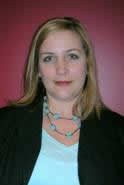
About Gena Walton
Gena has been with the IWK Foundation for 10 years, working in various development roles. In the fall of 2003 when the Foundation's strategic plan identified a need for a donor relations program, Gena became their Manager of Donor Relations. Gena is also the Canadian Director of ADRP. Prior to working at the the IWK Foundation, Gena worked with the United Way and a fundraising consulting firm.
Gena has spent the past four years working with IWK to build and implement a comprehensive donor relations plan. With the launch of their new strategic plan in 2007, the Foundation will continue to focus on acknowledgment, recognition and relationship management with an emphasized focus on stewardship.
ADRP International Conference
The Fourth Annual Conference of the Association of Donor Relations Professionals will be held at the Omni La Mansión del Rio in San Antonio, Texas, December 4-6, 2007 (Tuesday-Thursday). Pre-conference Institutes are slated for Monday, December 3.
ADRP is the authoritative organization and advocate for the donor relations and stewardship profession. The organization supports the development community by promoting the professional status of donor relations and stewardship offices through educational, professional development and networking opportunities.
To learn more about the Association of Donor Relations Professionals please visit:http://www.adrp.net
Interview by George Williams,
Communications Specialist, Planned Legacy
Planned Legacy: Can you tell us about the Association of Donor Relations Professionals (ADRP) and what your work as a Director for ADRP in Canada involves?
Gena Walton: ADRP is the authoritative international organization and advocate for the donor relations and stewardship profession. It supports and enhances all aspects of fundraising and development by promoting the professional status of donor relations and stewardship offices through education, professional development and networking opportunities.
Specifically, I am working with my colleagues to market ADRP and increase membership in Canada, and to enhance the value of membership. I'm excited to say that when I began my term with ADRP, we had only a handful of Canadian members. That has grown to 25 at last check.
Planned Legacy: What do you like most about being a donor relationship professional? What is the most satisfying part of your job?
Gena Walton: I enjoy working in donor relations because it really spans across the entire organization. No stone is left unturned when developing a great donor relations program. Collaboration, creativity and strategic thinking are key and it allows me to work closely with everyone in the organization.
Also, who wouldn't want to be in the business of thanking people? It's extremely rewarding to meet the many people who make our organization a success and to learn how humble many of them are.
Planned Legacy: What is your typical day like?
Gena Walton: No day is typical. This is also something I love! I could be planning a donor recognition event for a significant donor, writing a thank you card to a child who donated their birthday money, seeking approvals for signage, creating a donor list of 1,000 names, strategizing with development staff on a customized stewardship approach for a donor/prospect.....it really goes from one extreme to the next.
Planned Legacy: The profession of donor relations is becoming increasingly more important and formalized. Can you give us some insights into why this is occurring?
Gena Walton: I believe our donors are becoming more sophisticated and with this, rightfully so, their expectations grow. Organizations must be accountable to their constituents on how dollars are being spent. Having an organizational focus on donor relations ensures that everyone conducts business through the lense of a donor. It's customer service at its best.
Planned Legacy: How do donor relations and donor recognition tie together?
Gena Walton: Recognition will be a pillar in any donor relations program. It's important to ensure relevancy and consistency in recognizing your donors. Ensuring that all donors at certain levels are provided the same level of recognition is paramount.
Planned Legacy: Many non-profit organizations now have a dedicated PR professional. How does this tie in with donor relations?
Gena Walton: We work with our communications team as closely as we do all our other teams within the Foundation. As we become more customized, our reliance on communications is definitely growing. If having your own PR professional is not an option from a resource perspective, identifying someone from the existing communications team to work almost exclusively with donor relations offers a great compromise.
Planned Legacy: Many donors claim that they don't want any recognition, but in your experience what is the truth in general?
Gena Walton: I think all donors want to be appreciated. This appreciation can be as little as providing them with information about your organization, to listing their name on a donor wall. We recently began hosting donor events in various communities. It's extremely rewarding how many people come out to hear about the work we are doing. It's not a costly endeavor (this is what donors don't like) but goes very far in building relationships.
Planned Legacy: What are some of the most important things donor relations professionals can do when working with donors?
Gena Walton: Listen. Capture the information. If donors contact you and indicate they only want one mailing a year, make sure you code them appropriately to ensure they only get one mailing a year. Use your database wisely and to its maximum potential to communicate with your donors the way THEY want to be communicated with.
Planned Legacy: How is your donor relations program organized?
Gena Walton: The donor relations program at the IWK Foundation oversees both core donor relations activities and gift processing. We work very closely with our development staff (Relationship Managers) who execute much of the ongoing donor relations activities. It would be impossible from a resource perspective otherwise.
Planned Legacy: Can you provide some insights into the type of donor relations provided for different programs?
Gena Walton: We have on-site recognition for all donors at $500+. Customized stewardship plans include events, personal visits, updates, site recognition etc. for major donors. We have a stewardship checklist for annual fund donors that ensures relationship building "touch points" are defined each month. A stewardship report is published that recognizes donors of $1,000. We send holiday greetings, newsletters (with content specific to who we are sending to) and invitations to events to various segments of donors.
Planned Legacy: How does the practice of donor relations differ depending on the level of giving for a particular donor?
Gena Walton: I think the largest variance is customization. For our larger donors, we are very strategic with how we steward them throughout the year and who we involve in that process. A welcome package is sent to all first-time donors to "welcome them to the family".
Planned Legacy: What are some of your favorite ways of saying thank you? Which are the most effective?
Gena Walton: We use an acknowledgement card, which is sent with income tax receipts as a thank you for gifts under $250. The card has a patient story and a picture of the patient. We find this is very meaningful to these donors and it is very helpful in streamlining the process of acknowledging these donors.
Our community events have been very successful because they feature a real cross-section of people. You may have a large corporate donor or an individual who has included us in their estate. It's a very warm and meaningful way to say "thank you."
Planned Legacy: What are some best practices when it comes to moving donors from one level of giving to the next?
Gena Walton: We have a sophisticated moves management program, with a committee that meets monthly. This is an excellent forum for discussing donor growth.
Planned Legacy: What are the most important things donors want from a non-profit organization?
Gena Walton: Information about their dollars at work. Prompt acknowledgement.
Planned Legacy: Have you found any types of recognition to be especially valuable to your organization?
Gena Walton: Whenever we involve a benefactor of donations (caregiver, patient,
family) to tell their story of impact, it's always very positive. We do this as much as possible.
Planned Legacy: With the advent of the Internet and electronic technology, is providing effective recognition easier or more challenging?
Gena Walton: This is new territory for us and will be a next step in evolving our donor relations program.
Planned Legacy: Are there any particular methods or systems that work best for donor relations management?
Gena Walton: Raiser's Edge action tabs work very well for us to capture donor activity.
Planned Legacy: Do you have any recommendations regarding skills and education for new and aspiring donor relationship professionals?
Gena Walton: Talk to your colleagues. ADRP provides an excellent resource to do this and the annual conference is extremely beneficial to donor relations professionals. Don't be afraid to pick up the phone and ask others about their programs. We're in the relationship business....we like to share ideas.

About IWK Health Centre Foundation
Established in 1996, the IWK Health Centre Foundation is a charitable foundation dedicated to helping the IWK provide the best care possible to Maritime families by encouraging financial contributions from the private sector.
The IWK Health Centre, while located in Halifax, Nova Scotia, is an essential resource for women, children, youth and families from across the Maritimes and beyond. Women come to the IWK for care of complex gynecological issues, high-risk pregnancies and to give birth. The IWK provides a broad spectrum of care to the region’s children and youth. World-class emergency, surgical, mental health and inpatient care is provided to families from Nova Scotia, New Brunswick, Prince Edward Island, and in specialized cases, Newfoundland.
In addition to the thousands of patients who require inpatient care at the IWK, tens of thousands more visit our ambulatory clinics for outpatient management of conditions such as arthritis, diabetes, cystic fibrosis and asthma.
The IWK’s care touches Maritimers far beyond the walls of the Health Centre. Through traveling clinics, children in communities throughout Nova Scotia, New Brunswick and Prince Edward Island visit with IWK physicians and nurses at their local hospitals.
Clinical specialists at the IWK also participate in Telehealth – a network that allows care teams to consult with patients, families and other health professionals throughout the Maritimes using telehealth technology. As a result of the outreach to communities outside of Halifax, patients can often receive care closer to home and reduce the stress and cost of traveling to the IWK.