
Planned Giving
10 Steps to Developing A Planned Giving Program
by Sherry Clodman, CFRE - Principal EH Pearce Consultants
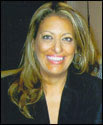
Sherry Clodman is the Principal of EH Pearce Consultants, a general fundraising consultancy that specializes in planned giving. An accomplished author, Sherry has held several National Development Directorships and is a seasoned leadership professional. Well respected for her broad-based expertise, achievement, high standards of practice and commitment to ethics, Sherry has worked with organizations large and small, urban and rural, local through national. Her books, including 2007 publication WELL ADVISED: A Planned Giving Reference Source for professional advisors, are available from Canadian FundRaiser. To order please e-mail [email protected] or call (416) 345-9403.
10 Steps to Developing A Planned Giving Program
If you build it….they will come. Nowhere is this truer than in the field and practice of planned giving! So just how do you build a winning planned giving program for your organization? You just follow the steps I’ve outlined below.
- Obtain a commitment from the Board of Directors
- Create a Professional Advisory Committee
- Engage a Professional Planned Giving Officer or alternatively,
identify a Development Professional on staff to oversee the Program - Create a planned giving case statement
- Produce appropriate policies and guidelines
- Establish a system for creating and maintaining administrative and filing procedures
- Produce the first year’s budget and obtain approval from the Board of Directors
- Prepare an action plan or business plan
- Initiate a Donor Recognition and Stewardship Program
- Manage the ongoing Program
To provide you with an abbreviated blueprint, let’s summarize each of these steps. (For expanded information, sample documentation and examples please refer to PLANNED GIVING: Making it Happen Vol. 1 and Vol. 2.)
Step 1: Obtain a Commitment from the Board of Directors
Your Board is ultimately responsible for the Planned Giving Program and its funding. Their support is extremely important, so it is critical to get them on-side. Getting your Board to say “Yes” to a Planned Giving Program however, can be a bit complicated. So it is wise to have the Board formally endorse a resolution to develop a Planned Giving Program at your charity.
You will need the Board to understand the Program and be supportive; to be seen as sponsors; and to approve certain types of gifts (such as gifts of life insurance, real estate, securities, gifts-in-kind, etc.) The Board will also need to approve budget allocations; the creation of a professional advisory committee; and they will need to assist in marketing the Planned Giving Program.
Step 2: Create an Advisory Committee
So what are the responsibilities of an Advisory Committee? Depending on the Program, responsibilities may include establishing policies and procedures; making periodic (quarterly or semi-annual) reports to the Board; and interpreting the Planned Giving Program to members of the organization.
The Advisory Committee will assist with prospect identification and analysis and work with the Planned Giving Officer to make presentations. Members may also make solicitation calls in tandem with a senior volunteer and/or staff person. Their role is as technical support and “ice-breaker.” Committee composition will include professional advisors such as lawyers, accountants, insurance agents, tax, financial or estate planners, stock brokers, realtors, etc.
Step 3: Engage a Professional Planned Giving Officer
At a minimum, identify a staff person who will be responsible for overseeing the Program. Remember… in order to be effective, a development officer must be able to spend at least 25-30% of their time in the planned giving area, and obviously --- 100% is desirable.
Some of the most important characteristics of a good planned giving officer include a deep interest in promoting the organization; knowledge of the charity; good interpersonal skills and an understanding personality; superior communication skills and sales ability.
The ability to write and speak effectively; to be persuasive without being aggressive; and to work well with Boards and other volunteer groups are all essential ingredients. Additional key elements include an appearance that engenders confidence; a personality that demonstrates initiative and maturity; patience; and a basic knowledge of the tax system.
When looking at high performance competencies and skills strive for a results orientation; a customer focus; a team player; an ability to influence outcomes; logical problem solving skills; personal accountability; and a keen attention to detail.
Together, the above characteristics and skills will poise your organization for planned giving success.
Step 4: Produce Policies and Guidelines
Having a written statement of policies and procedures is crucial to the operation of a planned giving program. An example reason why would be the CEO saying, “You are the planned giving officer so you look after the day to day details.” While that is true, just wait until the first piece of real estate is accepted with a $5 million dollar environmental problem! That may just get you into a bit of hot water. It’s far better to clearly state all responsibilities prior to initiating your Program.
Include routine or anticipated issues that could potentially “threaten” the viability of the program and/or the organization. Have development staff prepare the policies and have the Administration and Board approve them. Policies define the authority of the planned giving staff and establish the parameters under which staff operates. They also define when Board approval is necessary. And keep in mind that the objective should be to encourage gifts, not to frustrate them.
PLANNED GIVING: Making it Happen, Vol. 1 recommends 10 Protocols generally included in a Statement of Guidelines. From the extent of Board, staff and Advisory Committee involvement and function, authority of gift acceptance and policy on restricted gifts, to who pays for legal opinions, appraisals and investment advice, this chapter is well worth the read!
Step 5: Create a Case Statement for Planned Gifts
It will be impossible to solicit planned gifts if you cannot articulate the organization’s future vision of itself. This is where the general case statement comes in. It defines the present situation, the past accomplishments and the future direction of the charity.
The general case statement should create a sense of urgency, offer a broad appeal and be supported by financial facts. It should be both rational and emotive. Evolving from the goals, priorities and directions of the institution, the general case statement should distill the aforementioned concepts into a clear and well developed presentation for the donor. It should answer the questions “why us”, “why now” and “what for”, and move the donor towards the needs of the organization.
At a minimum, when initiating a planned giving program, the organization’s general case statement needs to be foresighted and address gift planning options and opportunities. Ideally, a case statement should be created specifically for the planned giving program.
Showing the major impact of each arranged gift, the planned giving general case statement should emphasize the importance of endowment funds and present specific giving opportunities, e.g. $10,000 for an acquisition fund, $20,000 for a bursary fund, or $100,000 for a research fund. The statement should also state that planned gifts are sought and are considered very valuable with regards to meeting the future needs of the organization.
Step 6: Establish Systems for Creating and Maintaining Administrative and Filing Procedures
You will require an information system that adequately supports the planned giving program and provides several alternative ways to code a donor/prospect/suspect including age; contact priority; capacity to give; current point in the process of closing the gift; the donor’s interest; a “tickler” file for the next contact; and staff member or volunteer assigned to the prospect. Obviously, this is best accomplished in a computerized system, however if one is already in existence, it should be expanded to include key code types.
There is a need for paper files and individualized computer files and you will need the ability to store these files long term. You may wish to further segment your donor and prospect files between confirmed planned gifts and potential planned gifts, and your recording system will also require adequate clerical support. Reporting your work to the administration is essential, so develop a reporting mechanism that fairly reflects the progress of your work, and hence, the progress of the planned giving program.
The two major areas that must be covered are charting actual realized planned gift monies as they are received and demonstrating progress with expectancies. PLANNED GIVING: Making it Happen, Vol. 1 expands on these needs. Remember that your Board and CEO will be evaluating your progress based on these reports, so it is essential that you be judged on the appropriate criteria.
Step 7: Obtain Approval for First Year’s Budget
A planned giving program is “a present investment in a future return.” With most operating budgets already stretched to the limit, many organizations are unwilling or unable to fund additional support or administrative staff. Therefore, obtaining approval for a first year’s operating budget requires a well thought out strategic presentation.
A typical list of accounts which must be considered in establishing and sustaining an effective planned giving program would include salaries, benefits, office supplies and expenses, printing, postage, software/upgrades and equipment, audio visuals and photographs. Travel expenses, promotions, volunteer training, recognition and related costs should also be included along with marketing costs, dues and subscriptions, conferences and professional development, consultants, and the ever present miscellaneous costs.
Step 8: Prepare an Action Plan/Business Plan
An action plan is simply an outline of your goals and a listing of the steps that must be taken to reach those goals. Typically it includes the identification of a donor base; the goals, objectives and tactics of the Program; a listing of the number of gifts and the size of gifts required to reach the goals; a listing of the number of prospects that must be cultivated to produce the goals; and a marketing plan detailing the various activities that will be undertaken to obtain the needed prospects. Keep uppermost in mind that gift planning is an “art” not a science. You are well advised to set reasonable targets - just don’t be too optimistic.
Identifying the planned giving donor base means asking, “Who is my constituency?”
To establish a proactive and well targeted planned giving program where and what should you look for? Age, family situation, past giving record and financial ability are a good place to start. Don’t overlook hidden wealth, aka “the sleepers.” These are the donors who have your organization in their will, or who are considering including your organization in their will, but have yet to identify themselves. Obviously completely unknown to the institution, all charities have these donors, so ensure that your planned giving donor base is as “inclusive” as possible. Finally, establish goals and objectives for the program, and don’t get discouraged. If you do the right thing, your planned giving program will move forward.
You will also need a market strategy for planned gifts. An underlying strategy of the marketing plan is the undertaking of a number of activities to get the suspects and/or prospects to self-identify. It is much easier to contact individuals who have already indicated that they are interested or prepared to arrange a planned gift to your organization. Accordingly, it is very important that each activity has a response coupon or other means to elicit a response.
A typical marketing plan will include the purchase or production of comprehensive promotional materials; marketing through direct mail; marketing through a newsletter; wills clinics and estate planning seminars; information luncheons; marketing through existing programs and through professional advisors; as well as an educational program.
Step 9: Initiate a Donor Recognition and Stewardship Program
There are several reasons for a donor recognition program. It is just good manners to say “thank you” to your donors, it completes the donor solicitation cycle, and it is the beginning of a lifetime relationship between the organization and the donor. There are a number of benefits to having a recognition program such as added assurance that donors do not change their minds; the fact that it may lead to further or larger gifts or outright gifts of cash; it may encourage others to make gifts; and/or it may encourage anonymous donors to report their arranged gift.
Donor recognition programs promote dialogue between the organization and the donor. They help to ensure that a gift is meaningful to the donor and that it meets the needs of the organization as well. Recognition programs also encourage the donor to become more involved with the charity and often, they are a means to encourage gifts by family members. The recognition program may include items such as simple “thank you” letter, donor walls, kiosks, books, plaques and donor lists, specific naming opportunities, luncheons and tours, testimonial ads and donor profiles.
On the other hand, a donor stewardship program is simply a means to maintain the link between the donor and the organization - it is a continuation of the recognition the donor received when they first indicated their arranged gift. The stewardship program may be organized formally or informally, and it may be included with other on-going recognition programs. Nevertheless, it is mentioned as a separate program because gift planners should be conscious of the ‘ongoing need’ to keep regular contact with planned giving donors. Your stewardship program may include items such as Christmas, Birthday or Thanksgiving cards, publications, newsletters, or personal visits - each indicating your interest in the supporter.
Step 10: Manage the On-going Planned Giving Program
You will need to manage the major elements of the planned giving program. That includes the continuous education of potential prospects and the on-going education and cultivation of prospects, professional advisors and past donors. Monitoring and administration of estates in probate is also critical. Someone needs to do follow up with executors and lawyers to ensure that your institution receives its share and that costs to settle are reasonable. In the event of a challenge or question, who will be protecting the interests of your organization?
Together, the information, insight and practical tip provided herein will help you to build, manage and market your own winning Planned Giving Program.
About Sherry Clodman, CFRE
Sherry received her accreditation by CFRE International in 1993, is a founding Board Member and past Vice Chair of the Canadian Association of Gift Planners (CAGP), and has received two CAGP National Awards: ‘Outstanding Leadership and Vision’ and ‘Outstanding Commitment and Service to the Profession’. She is also a past Board Member of the Association of Fundraising Professionals (AFP), has been an active leadership volunteer for over 20 years, and has served on a myriad of local, regional and national professional and charitable Boards and Committees. She continues to be a leader in the field.
Known for extensive fundraising training to boards, staff and volunteers, and for assisting clients to establish, strengthen or expand their Fundraising and Planned Giving Programs, Sherry is currently leading another Canadian FundRaiser ‘Key To The Sector’ series of workshops centered on Planned Giving. A welcomed keynote speaker and seminar provider, Sherry has participated in numerous regional and international fundraising conferences and is available for speaking/training engagements. Call (905) 660-9423 or e-mail:[email protected].
A past Executive Editor and current Contributing Editor to Canadian FundRaiser E-news, Gift Planning in Canada, Charity Village and other philanthropic publications, Sherry provides thought provoking articles and sector book reviews. An Adjunct Professor teaching distance learning online at Georgian College (Fundraising & Resource Development Program) andFanshawe College (Business Management Program), she brings a wealth of expertise to the profession and the sector. For more information please visit:http://www.ehpearceconsultants.com.
Sherry is the author of bestseller PLANNED GIVING: Making it Happen! Vol. 1 - Managing Your Planned Giving Program, and Vol. 2 - Marketing Your Planned Giving Program. Her latest book is WELL ADVISED: A Planned Giving Reference Source for professional advisors. To order please call Canadian FundRaiser (416) 345-9403 or e-mail: [email protected]
About EH Pearce Consultants
EH Pearce Consultants is a full service general fundraising consultancy that specializes in the area of planned giving. Sherry Clodman, CFRE Principal, is ably assisted by a team of accredited practitioners, each proficient in select aspects of fundraising and development. The consultancy assists clients of all sizes. With decades of leadership experience in the non-profit arena, EH Pearce Consultants offers tremendous depth, broad sector reach, and a record of successful collaboration. Adhering to high standards of practice and ethics, EH Pearce Consultants is committed to assisting organizations to reach their full fundraising potential.
The company philosophy is to help clients develop in-house capacity. Working closely and collaboratively, the consultancy ensures that client objectives are met. The company goal is to exceed client expectations. EH Pearce Consultants takes pride in being on time and on budget.
For more information please contact:
Sherry Clodman, CFRE
Principal
EH Pearce Consultants
11 Toledo Crescent
Thornhill, Ontario
L4J 8J8
Phone: (905) 660-9423
Web: http://www.ehpearceconsultants.com
E-Mail: [email protected]
Would you like to be featured in our Community Ties Nonprofit Newsletter?
Do you have a story to tell that would offer valuable insights to our subscribers?
If you are a nonprofit development professional and would like to be interviewed for our Community Ties Nonprofit Newsletter, or if you have an interesting story that relates to donor recognition, donor walls, donor relations, stewardship, interactive technologies, nonprofit marketing or related nonprofit areas, that you think would be of interest to our readers, please e-mail us at [email protected].
We look forward to hearing from you!